
Imagine two people leaving a coffee counter after agreeing to be exclusive, each phone still carrying a screen of old app matches. Yes: close current conversations and remove old matches once exclusivity is agreed, then decide together whether profiles will be hidden or deleted so neither remains open to new dates.
Published by Between Dates
Exclusivity and the status of existing matches

An app screen often holds four different leftovers: a live chat, a name saved for later, a profile still shown to new users, and an account that stays active after the phone app is removed. Each leaves a different opening. A live chat can turn into a date conversation; a saved match preserves a backup option; a discoverable profile invites new introductions.
Exclusive dating normally closes all three openings. Existing conversations should end, saved matches should be removed, and the account should no longer place either of you in the dating pool. The account itself does not always need deletion on the same evening, but remaining searchable conflicts with the agreement.
Some pairs finish the cleanup at the kitchen table immediately after the conversation. Others take a day to locate account settings. Timing matters less than the stated status: no active pursuit, no holding people in reserve, and no profile presented to new dates. A retained account is harmless only when it is truly inactive and both partners understand what that means.
Removing matches can reinforce the agreement without proving commitment
Clearing matches gives exclusivity a visible consequence. It reduces the temptation to reopen a half-finished chat on a bored evening and prevents another match from reading a visible profile as an invitation. That is why app cleanup deserves more weight than a symbolic gesture.
Is a wiped screen proof of commitment? No. Someone can remove an account and still hide contact with former matches elsewhere; someone can also leave a profile undeleted for a short administrative reason while acting faithfully. What matters is honest conduct over time: dates and messages with others stop, questions receive straight answers, and the two of you honor the agreement you made.
Demanding a screenshot or inspecting another phone shifts the issue from a shared agreement to surveillance. That rarely settles lingering doubts. Treat cleanup as support for exclusivity, then judge the relationship by what happens after the deletion screen.
Unmatching, hiding, and deleting an account have different effects
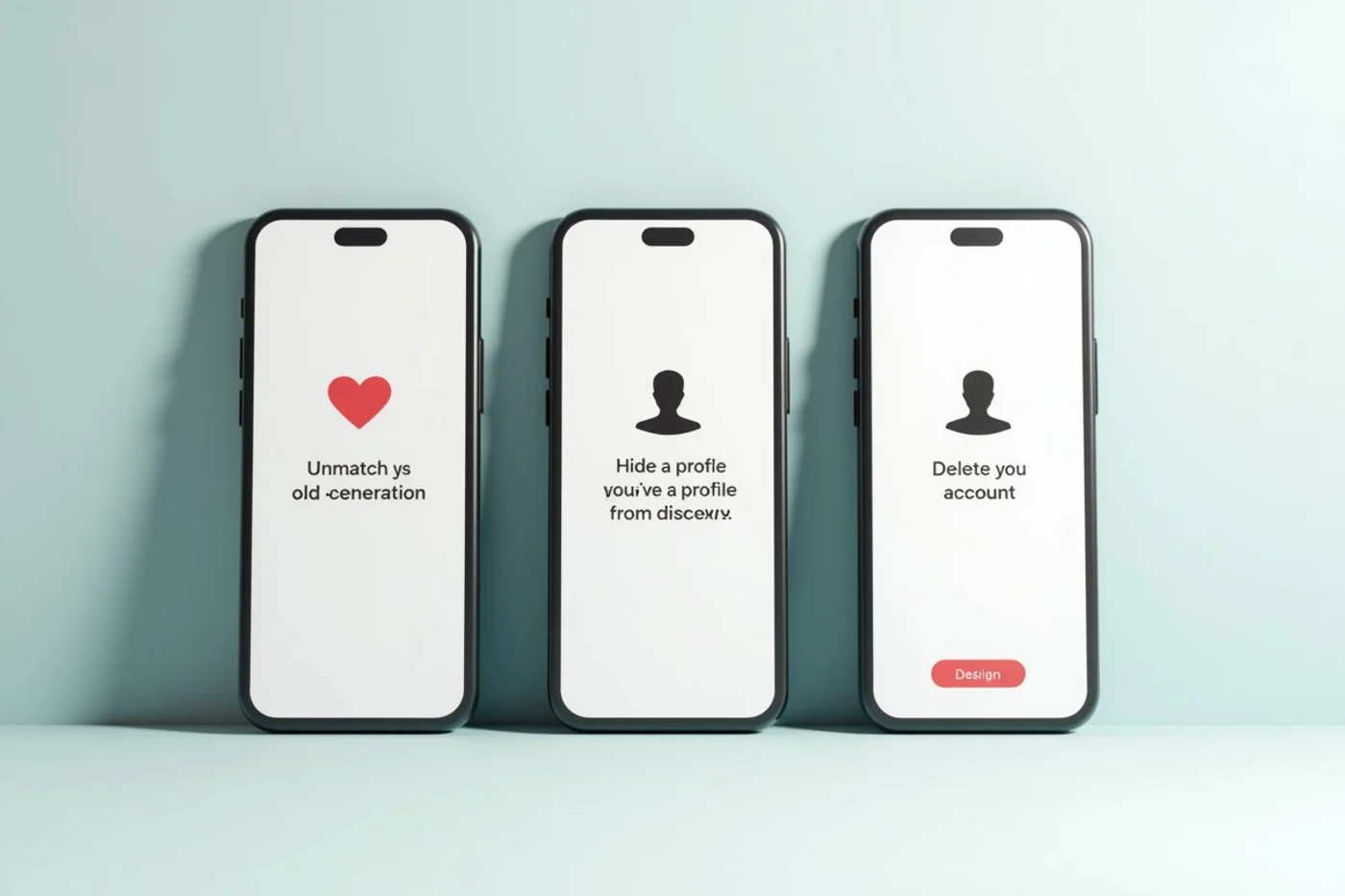
| Action | What It Changes | What It Leaves Open |
|---|---|---|
| Remove or unmatch an individual connection | Closes that named dating connection; chat handling varies by service. | Your profile, account, and other matches can remain active. |
| Hide or pause a profile | Stops new discovery where the service offers that setting. | Old chats, account data, and later reactivation can remain. |
| Delete the app from a phone | Removes access from that device. | The account, profile, and matches may remain online. |
| Delete the account | Ends profile visibility and account access once the service completes its deletion process. | Existing matches and messages are handled under that service's deletion rules. |
After a past match messages during exclusivity
A message from an old match does not, by itself, undo exclusivity. The meaningful line is engagement: replying with warmth, extending the exchange, or arranging contact keeps a dating connection alive.
Silence is usually the cleanest response when the message simply reopens a dormant match. When a prior conversation has enough history that no reply feels abrupt, a brief closure response is appropriate, followed by unmatching or closing the thread. It should not become a courtesy exchange that drifts into updates and flirtation.
Disclosure belongs in the shared agreement. An unexpected notification needs no play-by-play, but ongoing contact, a request to meet, or a reply that changes the situation should be mentioned promptly. Hiding it turns a minor interruption into a secret.
Secrecy or disagreement points to an undefined app boundary
Trouble usually shows up in the mismatch between what was said and what remains on the screen: one account is deleted, the other profile is still visible; one partner calls old chats closed, the other treats them as contacts worth keeping. That does not automatically mean bad faith. It means the app boundary was never fully named.
Different buttons can honor the same agreement when the result is the same: neither person is discoverable, neither is continuing with old matches, and neither is looking for a new date. The agreement also needs an answer for future return to an app. During exclusivity, reactivating a profile or browsing new prospects breaks the agreement; if exclusivity ends, say so before either account goes live again.
Bring the mismatch into the open and settle four points: profile visibility, the status of old matches, treatment of incoming messages, and what ending exclusivity means for the apps. Secrecy after that conversation is a relationship issue, not a settings issue.
Settle the account status as well as the status of the matches before either phone is cleared. The agreed action should hide or close the profile and remove the old dating connections that no longer belong in an exclusive arrangement. That small bit of precision prevents a later argument over a screen that each of you thought meant something different.